
Numeracy is about much more than counting from one to 10.
From noticing how many pieces of fruit are on a plate to working out which tower is taller, sorting toys into groups or deciding how many cups are needed at the dinner table, children are developing mathematical thinking through everyday experiences.
In the early years, numeracy learning is about supporting children to understand numbers, quantities, patterns, shapes, measurement and relationships — and developing the confidence to explore problems and find solutions.
At Guardian, we encourage children to discover that maths is all around them. Through play, everyday experiences and intentional learning, children can build strong foundations for numeracy while developing curiosity, confidence and a positive attitude towards learning.
Numbers are more than just a sequence
It’s common for young children to be able to confidently recite numbers without yet understanding what those numbers represent.
A child might happily say “one, two, three, four, five” without understanding that the final number they say when counting a group tells them how many objects there are.
This understanding develops through experience and repetition.
Try counting real objects together – steps as you climb them, snacks as you put them on a plate or toys as you pack them away. Encourage your child to touch each object as they count it.
You can also ask your child to collect a particular quantity: “Can you bring me two books?” or “Can you find three blocks?”
Comparing groups is another simple way to build understanding. Ask, “Which has more?” or “Which has less?” and encourage your child to explain how they know.
These everyday experiences help children connect number words with quantities and begin to understand what numbers actually mean.
What numeracy skills should younger children develop?
For younger children, there’s no need to focus on accurate counting or formal maths exercises.
Instead, look for opportunities to explore concepts such as:
- more and less
- big and small
- same and different
- sorting and grouping
- counting words
- shapes and space
- patterns
- size and position.
Play provides plenty of opportunities to explore these ideas naturally.
You might sort socks into pairs, group toys by colour, compare which teddy is bigger or smaller, or talk about whether a ball is round or a block has straight sides.
These simple experiences are helping children make sense of mathematical concepts long before they encounter formal maths at school.
Numeracy is everywhere
One of the easiest ways to support your child’s numeracy development is to look for maths in the routines you already share.
You could:
- count plates and cups when setting the table
- count buttons while getting dressed
- count toys as you pack them away
- count stairs as you climb them
- look for numbers on houses, buses or signs
- compare the sizes of items while shopping
- measure ingredients when cooking
- work out how many more cups or spoons you need
- talk about things being full, empty, heavier, lighter, longer or shorter.
These experiences show children that maths isn’t just something they learn from a book; it has a purpose in the world around them.
What if my child is already confident with numbers?
If your child can count confidently and recognise numbers, there are lots of ways to extend their mathematical thinking without simply asking them to count higher.
Try asking questions such as:
“Which group has more?”
“How could we make these two groups the same?”
“What do you think will happen if we take one away?”
“Can you find another way to sort these?”
You can also introduce simple addition and subtraction through play, explore patterns, build with blocks, compare heights, experiment with measurement or look for shapes in your environment.
The aim is to help children move from knowing numbers to thinking mathematically.
There’s much more to numeracy than counting
Counting is an important part of early numeracy, but it’s only one part.
Children also develop mathematical understanding through:
- sorting and classifying
- comparing quantities and sizes
- recognising and creating patterns
- sequencing events
- exploring shapes and spatial relationships
- measuring
- estimating
- problem-solving
- reasoning and explaining their thinking.
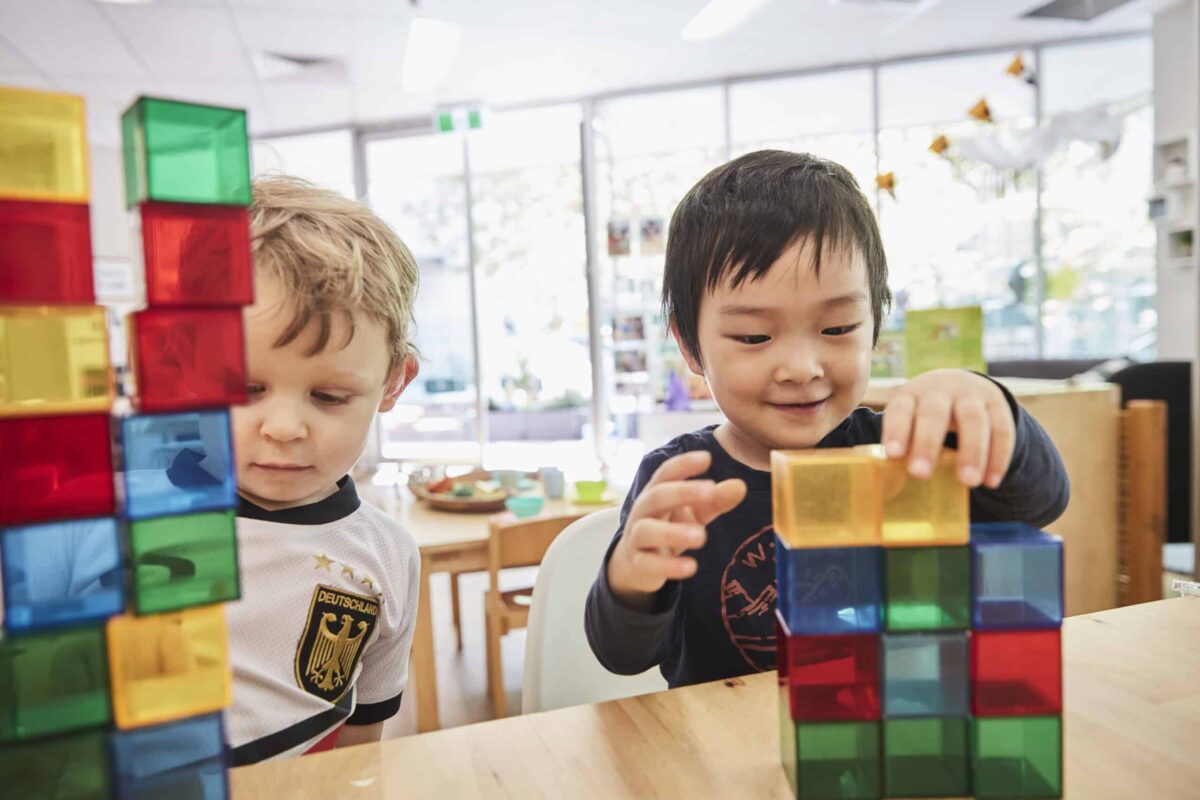
A child building a block tower, for example, might be exploring height, balance, shape and measurement. A child completing a puzzle is developing spatial awareness and problem-solving. A child deciding how to share five pieces of fruit between two people is beginning to explore quantity and division.
The best maths learning often looks like play!
Try simple maths games at home
You don’t need expensive resources or complicated activities to support numeracy.
Games such as Snakes and Ladders, Uno, dominoes, card games, memory games and dice games can all provide opportunities to practise counting, matching, recognising patterns and thinking strategically.
You can also try puzzles, building challenges, treasure hunts or hopscotch.
For example, roll a dice and ask your child to collect that many objects, or create a simple treasure hunt using clues such as “Take three steps forward” or “Look under the second cushion.”
These activities make mathematical thinking part of play, helping children develop skills while keeping the experience enjoyable.
When mistakes become learning opportunities
When children are exploring mathematical ideas, they won’t always get the answer right — and that’s okay.
In fact, mistakes can give us valuable insight into how a child is thinking.
Instead of immediately saying, “That’s wrong,” try asking questions such as:
“How did you work that out?”
“Can you show me what you were thinking?”
“What could we try?”
“Do you think there might be another way?”
Giving children time to explain, reconsider and try again helps develop persistence, problem-solving and independence.
It also sends an important message: you don’t have to get everything right the first time to be good at maths.
Building confident mathematical thinkers
At Guardian, our approach to numeracy is about supporting children to become confident mathematical thinkers, rather than simply teaching them to memorise numbers.
Through play-based learning and intentional teaching, educators create opportunities for children to explore mathematical concepts, ask questions, make predictions, solve problems and explain their ideas.
This approach allows children to build their understanding over time, with educators extending learning based on each child’s interests, strengths and stage of development.
A Flying Start to School
These foundations become particularly important as children prepare for the transition to school.
Guardian’s two-year Flying Start to School preschool/kindergarten program gives children time to develop the skills, knowledge and confidence that support a positive start to school.
Numeracy is one part of this broader journey. Alongside mathematical concepts, children develop communication, problem-solving, independence, social skills and confidence – all important foundations for becoming successful and enthusiastic learners.
Having two years to build these foundations means children have time to explore concepts through different experiences, revisit their learning and develop confidence in their own abilities.
Supporting a confident transition to school
Being ready for school is about more than knowing numbers or being able to count.
We support children to develop the confidence and independence they need to navigate new experiences, participate in group learning, communicate their ideas, build relationships and approach challenges with persistence.
As children move towards school, educators work closely with families to understand each child and support their individual journey. The aim is to ensure children feel excited, capable and confident about what comes next.
Because starting school is a big milestone. Developing a positive relationship with learning enables children to approach that milestone with confidence.
Look for the maths in everyday moments
You don’t need to set aside special time for maths at home.
Count the steps on the way to the park. Sort the washing. Compare which piece of fruit is bigger. Measure ingredients together. Build the tallest tower you can. Play a board game. Look for shapes on your walk.
These small moments all enable children to discover that maths is meaningful, useful and fun.
And when children are encouraged to explore, make mistakes, ask questions and keep trying, they’re developing more than numeracy skills. They’re building the curiosity, confidence and problem-solving skills that will support them through life.


